Every Spin Is a Fresh Start: Why 'Being Due' for a Win Is a Trap Aussie Players Keep Falling Into

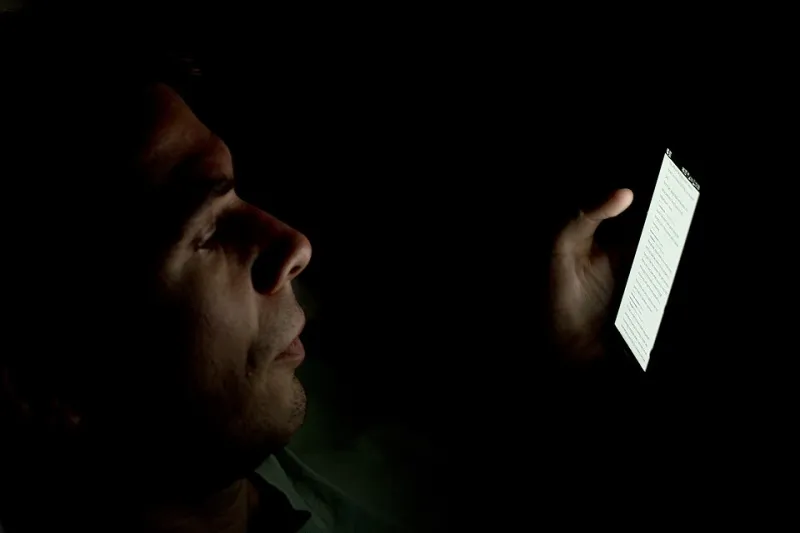
Photo by Photo by Okan You on Unsplash on Unsplash
Picture this. You've been spinning the same slot for twenty minutes. It hasn't paid out anything meaningful. You've watched the reels line up almost right half a dozen times. The logic starts creeping in: surely it's about to hit. It's been cold for ages. Something's gotta give.
That feeling? It's one of the most expensive illusions in online gambling. And if you've ever played at an instant casino — where games load in a blink and the next spin is always just one tap away — you've almost certainly felt it.
Let's talk about why that instinct is lying to you, and what the actual math says is happening every single time you hit spin.
Your Brain Was Built for a Different Kind of World
Humans are pattern-recognition machines. It's not a flaw — it's a feature that helped our ancestors survive. If you noticed that a certain berry bush was always near a water source, or that a particular cloud formation usually meant rain, that kind of pattern-linking kept you alive.
The problem is that your brain applies this same logic everywhere, including situations where patterns simply don't exist. Online casino games — especially the instant-play slots and crash games popular with Aussie players — use something called a Random Number Generator, or RNG. Every single outcome is mathematically independent of every other outcome. The machine has no memory. It doesn't know you've had a bad run. It doesn't owe you anything.
But your brain? Your brain absolutely believes it does.
What Gambler's Fallacy Actually Looks Like in Practice
The formal name for this trap is the gambler's fallacy — the mistaken belief that past random events influence future ones. It shows up constantly in instant casino play, often in ways that feel completely rational in the moment.
Here are a few ways Aussie players typically talk themselves into the next spin:
"It hasn't paid out in ages — it must be ready." The idea here is that the game has been "building up" to a win. It hasn't. Each spin has the exact same odds as the one before it, regardless of how long the dry streak has been.
"I hit big on this one last Tuesday — it's a loose machine." Past wins don't indicate future ones. The RNG doesn't have moods or cycles. Tuesday's jackpot and today's session share zero statistical relationship.
"I'm down sixty bucks — I just need one good spin to get back." This is where gambler's fallacy gets genuinely dangerous. The belief that you're somehow owed a recovery win is what pushes players deeper into sessions they should have ended an hour earlier.
The Coin Flip That Explains Everything
Let's strip it right back with a classic example. Flip a fair coin ten times. Say it lands on heads eight times. Most people, if asked what comes next, will say tails — because it feels like the universe needs to balance things out.
But the coin doesn't know what happened before. The eleventh flip is still 50/50. Always. No exceptions.
Slot machines work the same way, just with far more variables. A game with a 96% RTP doesn't "save up" that return and deliver it in predictable chunks. The return-to-player figure is calculated across millions of spins. Your personal session of 200 spins is statistically invisible against that sample size. You might run cold the entire time, or you might hit above expectation — but neither outcome was due.
Why Instant Play Makes This Worse
Traditional pokies at the pub had a natural pace. You'd pull the lever, watch the reels spin, wait a few seconds. There were interruptions — someone walking by, a drink to sip, a mate to chat with. Those micro-pauses gave your brain a chance to reset.
Instant casino platforms are engineered for speed. Games load in under a second. The next spin button is already lit up before the current result has fully registered. There's no friction, no natural break point. That relentless pace compresses your decision-making and makes it much easier for the gambler's fallacy to snowball unchecked.
When you're clicking fast and the losses are mounting, the "I must be due" narrative builds momentum. Slowing down feels counterintuitive — it feels like giving up — even though it's actually the smartest move you can make.
What the Math Is Actually Telling You
Here's the honest version of what the numbers say: the house edge exists on every single spin, not just the ones where you lose. A 4% house edge on a slot means that over time, the casino expects to keep four cents of every dollar wagered. That edge applies whether you're on a hot streak or a cold one. It applies on spin one and spin five hundred.
There is no mechanism by which the game adjusts to "give back" what it's taken. The RNG doesn't track individual player sessions. It just generates outcomes, one at a time, with complete indifference to what came before.
The sooner you internalise that, the harder it becomes to justify one more spin on the basis of what's already happened.
Breaking the Pattern Illusion
None of this means instant casino games aren't fun — they clearly are, which is why millions of Aussies play them every week. But fun with eyes open is a very different experience from fun that's secretly being driven by a cognitive trap.
A few habits that help:
- Set a session limit before you start, not after you're already down. When the money's gone, the session's done — regardless of whether you feel "close" to a win.
- Remind yourself out loud (or in your head) that the last ten spins mean nothing for the next one. It sounds basic, but verbalising it actually helps interrupt the pattern-seeking loop.
- Switch games if you notice the narrative building. If you find yourself thinking "this one owes me," that's your cue to either take a break or move on entirely.
The mirage of a due win is one of the most persistent illusions in gambling psychology. The good news is that once you can see it clearly, it loses most of its power — and your sessions become a lot more grounded in reality.
And reality, in this case, means every spin really is a fresh start. Not a debt being repaid.